We Have Moved!

This blog has been retired and will receive no new content. To read new Cranial Soup articles, please visit our new location.

Sunday, April 18, 2010

Bit.ly is Harmful to Your Reputation

It all started with a simple innocent tweet. As Vivek Wadhwa was finishing up his excellent post on outsourcing he tweeted about it and I replied with a tweet of my own:

my original tweet

Note the URL I tweeted to him was shortened using the xrl.in service.

Now, Vivek is a TweetDeck user, and TweetDeck uses bit.ly to shorten links, even links that don't need shortening, like mine. So what do you think happened when he retweeted me and responded?

Vivek's retweet

That's right, my already shortened link was reshortened with bit.ly.

Now what do you think you see when you click that link? The site I was trying to link to?

No, you see a warning page that implies that my original link leads to a malware, phishing, spam, or forgery site.

bitly-warning

So my link to a reputable site is being called a bad site by bit.ly because I used a competing URL shortening service in my original tweet.

Note that there is an email link to report mistakes on bit.ly's warning page. What do you think happens when you click it and report a mistake? Do they check the link and remove the flag if the site is ok?

No, they don't. They told me to make a new bit.ly link and give it out to people, as if that would undo the damage that was done, change the links in other people's tweets, and prevent others from retweeting the bad reputation damaging bit.ly link that I never made in the first place.

Then they apologized and told me some day their service will be better, still not removing the reputation damaging flag from the link.

bitly-email

Can something like this affect you and your website? You bet it can.

If you or anyone else ever tweets a link to your site using a competing URL shortening service, and that link gets retweeted with any twitter client that shortens all URLs with bit.ly (whether they need it or not) the resulting link to your site will be flagged as a bad site.

What happens when the average person clicks that link and sees that warning page? Well, the average person believes it and won't visit your site. And if your name is on the original tweet, it will also be on the retweet, giving you the reputation of passing out links to bad sites.

Will a smart web savvy user believe the bit.ly warning page? Maybe, maybe not. But the average person probably will. As a developer I have seen the average person believe a lot of things that were not true, placing their complete trust in things like that bit.ly page and other false positives, and believing the worst, even spreading the word about it as if it were the truth, telling others that a website or application was harmful. They think that companies don't do things like this without ironclad proof, so they believe every word of it.

What alarms me the most is the attitude of bit.ly with regards to this problem and how they refuse to remove the flag from innocent links. They don't care if your reputation is damaged.

And it is in the best interest of bit.ly not to fix the problem, since it makes more people use their service, worried that if they use another service and get retweeted, they could end up with a reputation damaging link to their site. So this whole problem serves to make more people use bit.ly, out of fear, rather than convenience or because they have a better service.

I am not a bit.ly user because it is not convenient for me. I have a browser plugin that uses xrl.in, that with a single click of a button, copies the shortened link to whatever page I am on to my clipboard, ready to paste anywhere I want.

Other links in the stuff I tweet use ff.im, because they are cross-posts from friendfeed. I was pretty sure if I post something on friendfeed, cross-posted to twitter and it gets retweeted, reshortened with bit.ly, it will result in one of those warning pages, too.

But I was wrong, it doesn't. In fact, there are a few other shorteners that don't get warning pages either, probably because they are so popular that they would get noticed pretty quick if bit.ly decided to pick on them.

Bit.ly does white list the following shorteners:

  • ff.im
  • youtu.be
  • goo.gl

There is no reason why bit.ly can't white list the rest of the popular shorteners if they can white list those. But those others are competing services and they don't feel like being nice guys about it. They would rather ruin the reputations of innocent people like you and me.

So what can you do to ensure you won't become a victim of bit.ly's "bad site" interstitial page?

There are only 2 things you can do:

1. Always use bit.ly to shorten your links and make sure everyone else in the world does too. (highly impractical, because you can't control what other people do.)

2. Let bit.ly know this is unacceptable. Tell them to play fair and white list the other shorteners. The choice of url shortener you use should be yours and not theirs, and you should not be punished with a reputation damaging warning page because you use a competing service. (easy to do)

  • Send them an email: support@bit.ly
  • Tweet them: @bitly
  • Spread the word by tweeting this post
  • Share this post on social networking sites
  • Blog about it
  • Tell your friends

Don't stop making noise about this till bit.ly stops damaging the reputations of innocent people.


UPDATE May 8, 2010: Bit.ly has changed their interstitial page, slightly. Instead of the top banner saying "WARNING - visiting this website may harm your computer" it now says "Stop - there might be a problem with the requested link"

But it goes on to say

  • Some URL-shorteners re-use their links, so bit.ly can't guarantee the validity of this link.
  • Some URL-shorteners allow their links to be edited, so bit.ly can't tell where this link will lead you.
  • Spam and malware is very often propagated by exploiting these loopholes, neither of which bit.ly allows for.


The link you requested may contain inappropriate content, or even spam or malicious code that could be downloaded to your computer without your consent, or may be a forgery or imitation of another website, designed to trick users into sharing personal or financial information.

bitly-warning-new

I still consider this unacceptable. If bit.ly can detect a shortened link at the time someone clicks, they can detect it at the time someone submits it for shortening, and just not allow it. That page is completely unnecessary and can still be damaging to someone's reputation.


Come on, bit.ly, just do the right thing! How hard is it to just not reshorten?

Saturday, March 27, 2010

Tons of Free Stock Photo Sites – Commercial Use OK – No Attribution Required

When you are a blogger, web designer, developer, or creating a product for resale, you might need photos for your posts, templates, and other designs, but you can't just use any photo you find on the internet. That would most likely violate someone's copyright and get you into a heap of legal trouble.

So what are you supposed to do if you don't have a camera or any photography talent?

Stock photos? Sounds good, but most stock photos cost money.

Creative Commons licensed photos from Flickr? That could be good too, but that requires a link back and there may be restrictions against commercial use. Can you imagine having to put a long Flickr URL on every t-shirt and mousepad you make?  How would you go about giving proper credit on a small 125x125 ad? And if you are making web templates it might not be the best idea to trust people that use your templates to keep the attribution links intact.

So where can you get a whole bunch of great photos to use, that don't require an attribution link, won't cost you a dime, and allow for commercial use, too?

Fortunately for you, I have done some research into this and found quite a few sources.
Screenshot - 3_27_2010 , 5_16_30 AM  Fotolia has a section on their site where they give away free stock photos. The selection is limited, but they change the photos offered on a regular basis. Good for web use. Files must not be displayed in a size bigger than 640x480 pixels. Can not be used in items meant for resale (no printed t-shirts, web templates, etc). Free membership is required.

Screenshot - 3_27_2010 , 5_18_37 AM  freestockphotos.biz has tons of photos with varying licenses, many of which allow for commercial use, including items meant for resale. Check the license terms included on the page with each photo.
Screenshot - 3_27_2010 , 5_20_34 AM  BurningWell.org has nothing but public domain photos. You can do anything you please with them, including items for resale.

Screenshot - 3_27_2010 , 5_23_11 AM  Crestock gives away one free stock photo each week. If you hit the site every week, you can build quite a nice collection. Sometimes they even give away a vector instead of a photo. All material they give away is covered by their standard license agreement. Free membership is required.
Screenshot - 3_27_2010 , 5_25_30 AM  Free Media Goo provides free images, audio files, textures and flash files that you can pretty much do whatever you please with them except use them in propaganda, pornography, or anything suggestive, according to their license.
Screenshot - 3_27_2010 , 5_26_39 AM  freerangestock offers photos you can use for just about anything. They request that you give credit, but they also say it isn't required if you don't want to. There is a credit and link requirement if you use their photos as part of a web template, though.
Screenshot - 3_27_2010 , 5_27_59 AM  Image*After lets you do anything you want with their photos, as long as you don't use them to set up a stock photo site that competes with theirs.
Screenshot - 3_27_2010 , 5_29_21 AM iStockPhoto gives away one free stock photo each week, under their standard license. They also give away a free vector, video file, and audio track each month. Free membership is required.

Screenshot - 3_27_2010 , 5_31_46 AM  Morguefile has some very generous license terms that even allow you to sell the images, as images, as long as you have altered it so that it isn't identical to the original.
Screenshot - 3_27_2010 , 5_32_59 AM  PDPhoto.org has some really nice images that you can do whatever you please with, as they are all dedicated to the public domain. There are a few sections containing photos that are not public domain, but that collection is a rather small part of the site.
Screenshot - 3_27_2010 , 5_34_00 AM  Photogen has images that are good for the standard commercial uses that don't involve redistribution or printing on products for sale.
Screenshot - 3_27_2010 , 5_36_21 AM  Photo Rack says there are no limitations on the use of their images.
Screenshot - 3_27_2010 , 5_37_23 AM  Pixel Perfect Digital has lots of great images, but you can't use them for items for sale or redistribution, and that includes not using them in web templates.
Screenshot - 3_27_2010 , 5_38_40 AM 
Public-Domain-Photos.com has images you can do anything you want with, no restrictions.
Screenshot - 3_27_2010 , 5_39_44 AM 
PublicDomainPictures.net is a repository for free public domain photos. You can do anything you want with them, but keep in mind that none of the photos have model or property releases. If you want that type of photo, they do sell some cheap, in the bottom section of the main page.
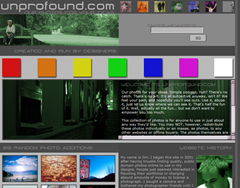
Screenshot - 3_27_2010 , 5_41_22 AM  Unprofound.com was created by designers, for designers and will pretty much let you do anything with their photos except redistribute them as stock photos. The only payment they want is the pleasure of knowing what their work has become. All they want in return is to be able to see what you have done with them, which means either sending them a photo of your product, screenshot of your software, link to your website or template, or whatever other way you can show them what their images have become part of.


Norebbo has some great 3D renderings that would be perfect for illustrating technology related blog posts, creating web templates, Powerpoint presentations, and many other types of projects. The free images are ENORMOUS compared to similar free images offered by other artists. Norebbo has some very generous terms of use for his free images, too. You may use them any way you wish, except redistributing them, as-is. And while a link back to his site is appreciated, it is not required. And if you need even larger versions than Norebbo is offering for free, you can buy them in his shop.
Screenshot - 7_25_2013 , 9_07_04 PM Stock.xchng offers lots of high quality stock photos, free of charge. Their licensing terms allow for commercial use, with only a few limitations. If you'd like to use a photo for certain uses (web templates, print on demand items, etc.), you will have to contact the photographer and ask for permission, first. Some photos also require you to notify the photographer that you plan on using it for something that will be displayed, publicly. So, for example, if you plan on using it for a blog post, contact the photographer and give him a link to your post, so he can see it. Some photos may have additional terms, set by the photographer. Check the page before downloading. And be sure to rate and leave comments on the photos you use. Photographers love getting feedback on their work. Free membership is required.

Do you know of a stock photo site that I might have missed that will allow you to use their images commercially, without attribution? Leave me a link in a comment.

Sunday, February 07, 2010

Become a Jazz Fan

00007194 I wasn’t born a jazz fan, but I did form an instant “addiction” at age 13. How does that happen to some one?
So you heard some music you liked and were told it was jazz, and you wanted to hear more, and you did. Bang! You’re a jazz fan!
But that wasn’t the whole story. Many years later you wound up with a collection of thousands of albums by ten times that many musicians. And now you’re a serious jazz fan. “Back in the day”, that was a hit or miss proposition, but now there’s a mountain of resources to get you there. So here is the shortcut path.
First, there’s radio. Chances are your area doesn’t have much jazz radio on the FM band, although there are many full-time jazz stations around the world. Many colleges in the US support part-time jazz programming, and if you live near a college or university, that may be a resource. Fortunately, many of these stations are also on the Internet and you can find them from New York to Vladivostok and Tokyo and many cities in between, all in a day’s search (or less). My smart phone has an application called WunderRadio [sic] that can pick up in excess of 35,000 Internet stations (I have managed to bookmark 27 full-time jazz stations, without having to even look hard).
Unfortunately, fulltime jazz stations are usually listener supported and consequently have to appeal to the largest possible audience. As a result they tend to exclude almost all but the most widely popular music, which is not always the “best” in jazz.
If you truly want to broaden your interest, you must dig deeper. One example of true excellence is WKCR (www.wkcr.org Columbia University) that has had continuous jazz programming since the 1940’s (the oldest jazz station in America). Although they only broadcast jazz on a part-time basis, their programming covers the entire spectrum, and they run many specials where they sometimes focus on a single player for 24 hours straight or more. Their music is streamed over the Internet, and they also have archived music for your listening enjoyment.
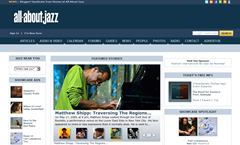
Screenshot - 2_7_2010 , 12_21_39 PM Another good starting point, www.allaboutjazz.com describes itself as the web’s premier resource for jazz-they are, without question, the largest Internet site devoted entirely to the music. They publish news and reviews and conduct forums and include a streaming service. AllAboutJazz also publishes an excellent hard copy jazz newspaper that you can subscribe to for the cost of postage. Like WKCR, they believe in a full spectrum approach.
Internet jazz pages seem almost endless-and not just American music. Run searches for German Jazz, French jazz, Japanese jazz…-you’ll be amazed by how many countries you can come up with. Two of my favorites are Norway and Poland where jazz has really taken hold in a big way.
Many musicians and groups now have their own web page, and, if you develop any favorites, be sure to look them up. In some cases you will find samples of their music along with complete discographies of all the albums they have performed on.
You can also find tons of material on sub-genres of the music, all the way from Dixieland to free jazz and the avant garde…and, subjects you might think would be obscure, like who was the most famous bass clarinet player in jazz or what was The October Revolution of 1964. The answers to these and a myriad of other questions are usually covered in extreme and extraordinary detail.
There are also numerous discussion groups on the Internet devoted to jazz where you can meet other fans and musicians and chat about the music. Some of them can be quite informative, and you will also have a chance to ask knowledgeable people direct questions to broaden your understanding and interests. The largest and most active of these forums that I am aware of is on Amazon.com.
Screenshot - 2_7_2010 , 12_24_23 PM Want to read a book? You could start with Jazz For Dummies by Dirk Sutro . Beyond that, there are history books galore and encyclopedias, some of which categorize the music by sub-genres with discographies bursting from every page. If you need an exercise program and you don’t mind weight-lifting, you might want to build a reference library.
Here are some books I have found useful over the years:

Vladimir Bogdanov - All Music Guide to jazz
Alyn Shipton - A New History of jazz
Ian Carr - Jazz The Rough Guide
Nat Hentoff - Jazz Is
Bill Kirchner – The Oxford Companion To Jazz
Leonard Feather – The Biographical Encyclopedia of jazz
Even if you don’t read them, a collection like this will impress the hell out of any vagrant musicians who happen to be visiting you.
So, after all these years, what are the resources I use most? Well, for one thing, whenever I run across a new musician I particularly like, I check out the other members of his group to see what they’ve recorded. I also look into what other musicians they have previously played with.
My smart phone also has two Internet stations I find invaluable: LastFM and Pandora. With both of these you can create your own “stations” by feeding in the names of a few musicians you like. These websites then stream back to you music that is similar to that played by the musicians you selected, often introducing you to players you never heard of that match your taste perfectly! (Personally, I think that what appeals to me about jazz is that it expresses the entire range of human emotion-the good, the bad, and the ugly-on a truly grand scale.)
And last, but not least, there’s live jazz. I live near New York City so it’s easy for me to find entertainment that suits my tastes. I don’t travel much, but I still attend a festival occasionally where large groups of musicians get together to play-sometimes as long as a week or more at a time. Most large cities today have at least a club or two where live jazz can be heard. Some even have “house bands” that perform regularly.
Jazz musicians often find it difficult to make a living and many of them teach at local schools or take on individual students. In any case I feel these guys deserve whatever support I can give them. They have given me so much.
Oh, and in case you are wondering how a jazz musician can end up with a million dollars? The answer is, by starting out with ten million dollars.

dan-bresnahanThis has been a guest post by Dan Bresnahan. Follow him on Twitter or Friendfeed and let him know if his article has helped you. You can also read and subscribe to his blog, Out to Lunch Jazz.

Thursday, January 21, 2010

Number Icons (CC-BY)

Big, beautiful, and easy to read, these icons will dress up any application or website, where you need some number icons.

Included in the set are the numbers 0-9 in PSD, PNG, ICO, BMP, and PSP formats.

The layers are preserved in both the PSP and PSD files, so you can use the color changer in your favorite graphics editor on the lower layer, to customize them to suit your needs.

The ICO files show big, bold, and beautiful in just about all versions of Windows, including good old Win9x.

These are actual size screenshots from Explorer (they also look great in the system tray):
 number icons number icons 
number icons

Released under a Creative Commons 3.0 Attribution license, they are suitable for both commercial and non-commercial use.

This item has been moved to my art site.

Wednesday, December 09, 2009

It started with a piece of string...

string Then evolved into a short elastic strap with a set of snaps at both ends. This was my solution to a problem.

What problem was that?

When my daughter was just a baby, back in the mid 80's, she kept throwing her pacifier out of the stroller and then would holler like hell, and I couldn't give it back to her to shut her up because it was now dirty. So I tied a string on it and attached it to the stroller. It didn't stop her from throwing it, but it did keep it from hitting the ground and getting dirty or lost.

But the string didn't work well for bottles, and untying knots was a real hassle, and something that couldn't stretch restricted her from being able to drink her bottle while lying down in the stroller. A string only worked well while she was sitting up.

Elastic and snaps...it was perfect. Other mothers saw what I had done and wanted one for their kids' bottles, too. I made a bunch and kept them in my purse, individually sealed in little zip-lock bags. They cost me less than $1.00 to make, and I sold them for $2.00 each.

Then a good friend of mine suggested I get a patent for it and find a company to mass produce them and make mad amounts of money on royalties.

He put me in touch with a company that supposedly specialized in helping inventors get their products patented and bringing them to market.

Word of advice: Don't deal with these companies. They will do nothing to help you. It will cost you a lot of money and you will get nowhere.

After paying $400 for a rather poorly written "market study report", they managed to talk me into paying another $5000 and entering into a 5 year contract with them, promising to contact manufacturers and pitching my idea to them, and if a company was interested, they would get them to pay the cost of patenting it in my name, and I would get a royalty on every single copy of my invention that they manufactured, regardless of whether they actually sold any.

They convinced me that it was far cheaper to let them handle it, since they had offices all over the world and could set up meetings with company executives. They said my cost in air travel alone would exceed the $5000 if I tried to do it myself, nevermind hotels, paying for expensive lunches, drinks, etc. They also said they were experienced and knew what to say, so I would have a better chance of getting a deal. And they had their own contract lawyers, specializing in royalty agreements, to protect my interests.

I fell for it, hook, line, and sinker. I took out a personal loan to cover the cost, from a financing company that turned out to be owned by them. It took me 2 years of high monthly payments to pay it off.

And what did they actually do for me? Did they contact all the big name baby product companies like Gerber or Fisher Price? No, they contacted publishers, like the one that produces Parents magazine.

They mailed out form letters to the editors of magazines targeted at the consumer that would be most interested in my product. They never contacted a single manufacturer. Those "inventors help" companies do this all the time, for any and every product idea that comes through their doors, no matter how good or bad the product idea is. The magazine editors are used to it and know it's all crap and toss every letter in the trash without ever opening them.

And they tied my hands for 5 years, preventing me from doing all the work myself, otherwise I'd still have to give them a large cut of my royalties if I succeeded in finding a company willing to manufacture it, on my own.

So I decided to wait till the contract expired. There was no way I was going to let these swindlers have another dime.

Before my 5 year wait was up, a conversation with someone made me realize that my great little invention had no hope and would cause the death of many innocent babies that had idiots for parents. The more popular my invention was, the greater the potential for it to kill, because stupid people that don't watch their kids properly and don't follow instructions, would end up using it in cribs and playpens and leaving their children unattended for hours, or using it in car seats while they were driving and unable to pay attention, resulting in strangulation deaths.

It was perfectly safe for use by parents that actually watched their kids and only used it in a stroller where they could watch what was going on.

If my invention had made it to market, I would have no control over it and no way to stop stupid people from buying it and killing their children with neglect. My product would be blamed and not the neglectful parents, and if it became a popular product the CPSC recall could have been huge, costing whatever company that produced it enormous amounts of money in recall costs and defending lawsuits, and ultimately, cost me a fortune, too.

And I would have these deaths hanging on my conscience for the rest of my life. I would never get a peaceful night's sleep ever again.

So that is why you can't buy my invention and why I never became filthy rich.


Photo credit: außerirdische sind gesund